
![How to Measure Diamond Clarity with the Diamond Clarity Chart [Full Guide]](https://images.prismic.io/smcjewels/aCg5RSdWJ-7kSQAd_image4.png?auto=format%2Ccompress&rect=0%2C163%2C600%2C300&w=3840&fit=max)
Before you step into one of the diamond stores Vancouver, you should understand what factors contribute to the quality and value of a diamond to find the perfect one. After all, a smart and conscious decision can lead you to the best diamond within your budget! One such factor is the clarity of a diamond. While the clarity may be visible to the naked eye, only a certified gemologist can determine where it lies on the diamond clarity scale.
Now, you must be wondering - what does the diamond clarity refer to? How does a gemologist decide the diamond clarity grade? What is a diamond clarity grade, and what is the diamond clarity scale? How do you measure diamond clarity? Worry not, because we'll answer every question in the later sections. Keep reading to learn more about how to know diamond quality:
![How to Measure Diamond Clarity with the Diamond Clarity Chart [Full Guide]](https://images.prismic.io/smcjewels/aCg5RSdWJ-7kSQAd_image4.png?auto=format%2Ccompress&fit=max&w=1200)
What is Diamond Clarity?
The diamond clarity refers to the absence of internal inclusions and blemishes on the surface of lab-grown diamonds or natural diamonds Vancouver. It's also known as the birthmark of the diamond. The diamond clarity is one of the 4Cs of diamond: diamond cut, diamond color, diamond carat, and diamond clarity. The 4Cs were introduced by the reputed Gemological Institute of America (GIA) in 1953, and they're now used to assess the quality and value of a diamond.
Diamonds are formed under extreme heat and pressure. This is why it's very rare to find a diamond with no inclusions present. Some natural or Lab Grown Diamonds Vancouver may look flawless to the naked eye, but may have internal inclusions in the diamond that are only visible with professional equipment. We'll discuss how to check diamond clarity and how diamond quality is measured in the later sections.
Recommended: How to Check a Diamond is Real or Fake at Home: Easy At-Home Tests
What are Diamond Inclusions and Blemishes?
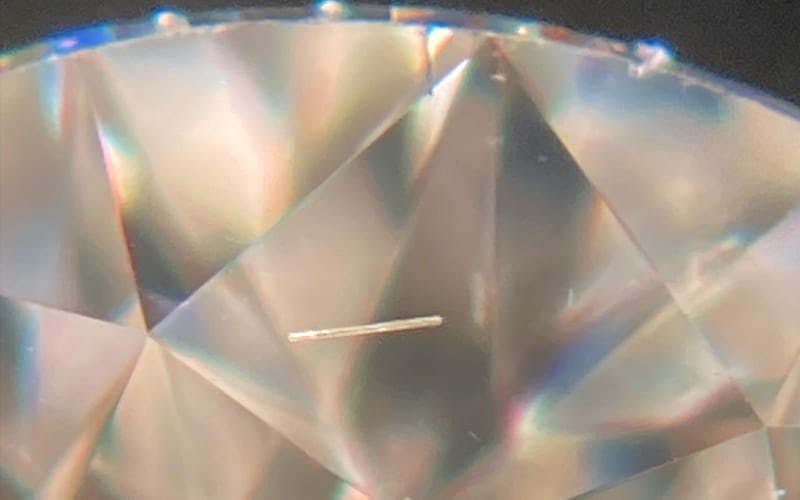
Diamond inclusions are internal flaws found within a diamond. Meanwhile, diamond blemishes are external flaws or flaws found on the surface of a diamond. While diamond blemishes are not as important as diamond inclusions when the clarity is graded, they still impact the overall appearance and value of the diamond and are considered during the measurement of diamond purity.
How is Diamond Clarity Determined? What is the Best Clarity Grade?
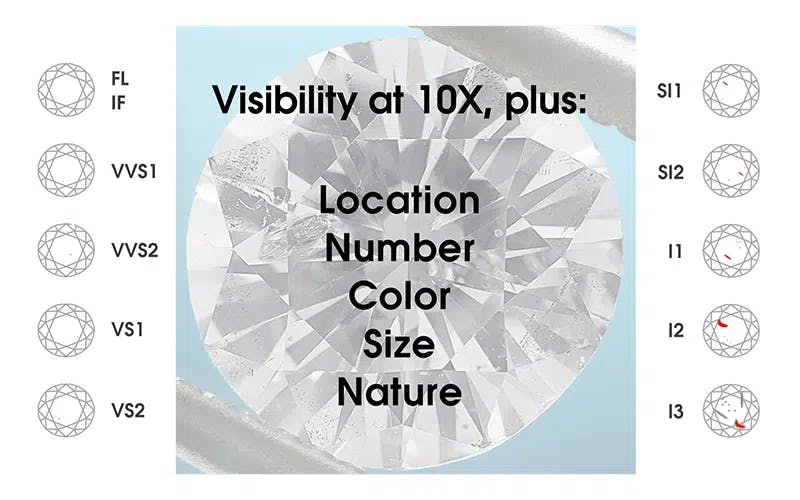
So, how is clarity measured in diamonds? A diamond's clarity is determined based on five different factors: the size, number, nature, location, and relief of the inclusions present within the diamond. They all follow a general rule: "The lesser, the better".
Inclusions are also further categorised into four types: cloud, graining, feather, and cavity. It is usually categorised based on how it affects the appearance of the diamond. Depending on each factor, the diamond clarity is determined and placed on the clarity scale.
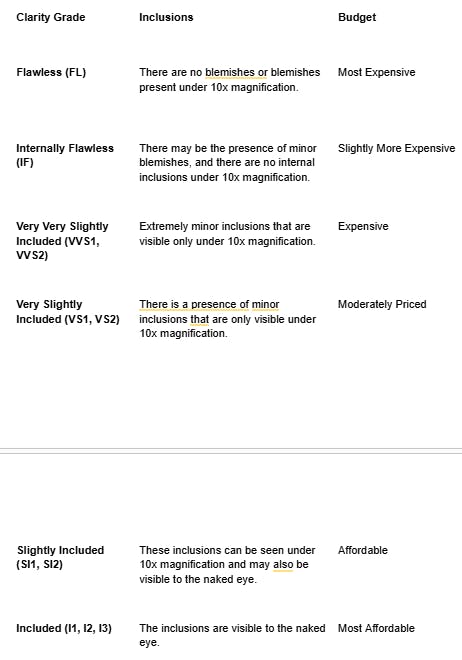
The diamonds with no inclusions present are graded as Flawless (FL) within diamond purity measurement and are also the most expensive diamonds. Perfect diamonds or flawless and internally flawless diamonds are nearly impossible to exist, which is why they only make up less than 1% of diamonds in the world. Learn how to measure diamond purity in the next section!
Read Also: Why Lab-Created Diamonds Are the Smartest Choice for Modern Buyers
How To Check the Diamond Clarity Grade on the Diamond Clarity Scale?
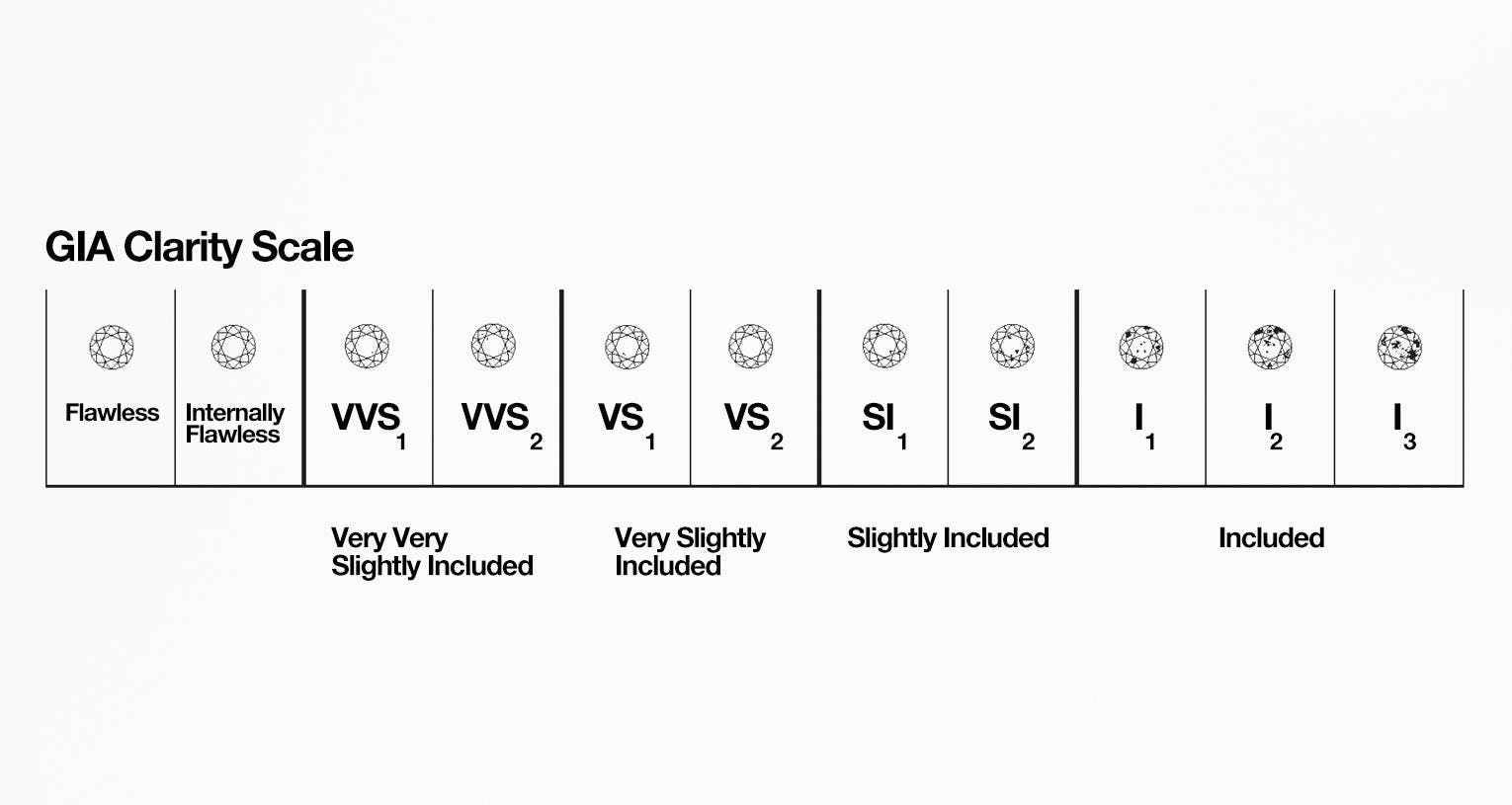
The GIA clarity scale is from the most trusted gemological institute in the world. The clarity scale consists of 11 specific grades. Higher clarity grades usually have fewer to no imperfections present within the diamond. If you want to buy a diamond with no visible imperfections to the naked eye, then you can purchase a diamond within the VS1 and VS2 scale or higher. If you don't mind a few visible imperfections, then you may select SI1 diamonds or diamonds with lower graded clarity.
Diamond Clarity Chart
Read More: Diamond Care & Maintenance Tips: How To Keep Your Diamond Sparkling?
Final Thoughts
Always check for the diamond clarity before you purchase a diamond. The diamond clarity grade helps you determine the purity of a diamond and helps you learn more about the clarity characteristics.
Searching for an Engagement Ring to Immortalise your Forever Bond?
Browse through our fine collection of diamond engagement rings. Our certified diamond rings are graded with the GIA diamond clarity scale. Find the one that's right for you!