
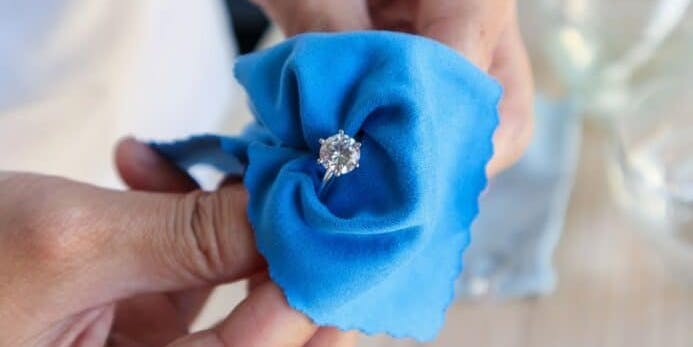
Do you want to maintain the sparkle and brilliance of your Lab Grown Engagement Rings Vancouver? 💎✨ Lab grown diamond jewelry is known for being an ethical choice and has the same properties as natural diamonds. In this blog, we will discuss the techniques used by diamond stores Vancouver and the best way to clean lab grown diamonds.
Lab-grown diamonds have the same composition as natural diamonds and require proper care to maintain their glamorous appeal. Not knowing the right diamond cleaning techniques can lead to dulling, scratches, or even permanent damage to the surface of custom wedding rings Vancouver.
To keep your diamonds shining bright, we will help you learn the best techniques to clean the lab diamond engagement rings Vancouver so that you can maintain their flawless appearance for years to come! Read the next section of the blog to know how you can take care of your lab grown diamond rings.
What Are Lab Grown Diamonds?
Lab grown diamonds are diamonds that are created within a controlled laboratory space. Scientists replicate the conditions under which natural diamonds are created and use advanced technological processes(such as HPHT and CVD) to create the lab diamonds.
These diamonds have the same chemical and physical properties as natural diamonds and are also real diamonds. Laboratory made diamonds are not only ethical, but also cost lower and are of high quality.
Why You Need To Clean Lab Grown Diamonds
Before following tips to care for your lab grown diamond, let’s take a look at the reasons why you need to clean them:
1. Exposure To Dust & Pollution
Exposure to environmental factors such as dust and pollution can cause your diamond to become more dull.
2. Body Oil, Lotion & Other Chemicals
The diamond may form a film over its stone if it is exposed to body oil or lotion from the body.
3. Everyday Usage
If you wear your diamond jewelry every day, then chances are that it is exposed to high levels of dust and chemicals daily, affecting its shine and brilliance.
What Do You Need To Clean Lab Diamonds?
Now, we are aware of the reasons behind why a diamond may lose its sparkle. All hope is not lost! We can clean the diamond, and here’s what you need to clean them:
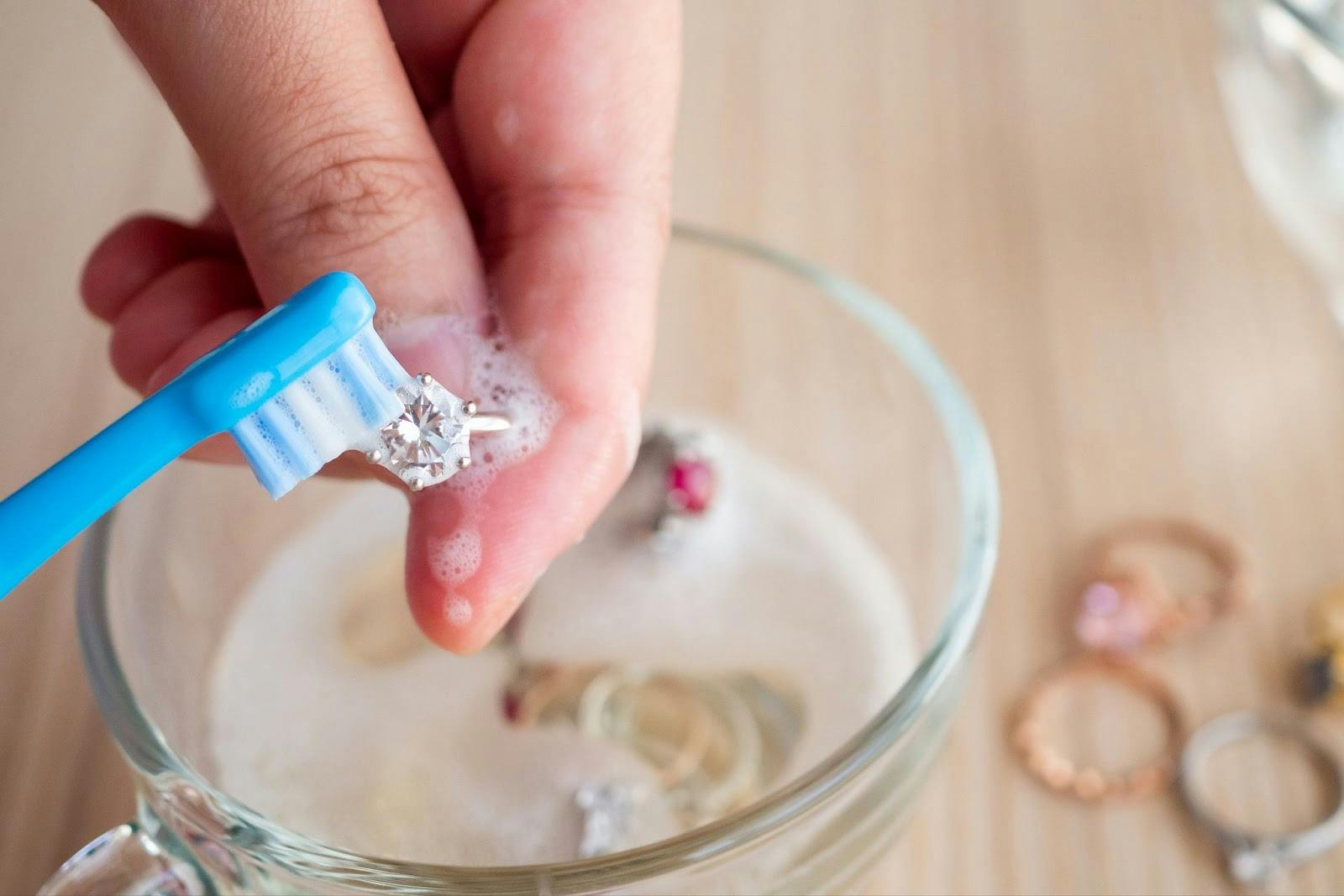
- A soft-bristled toothbrush
- A bowl with warm water in it
- Mild liquid soap solution
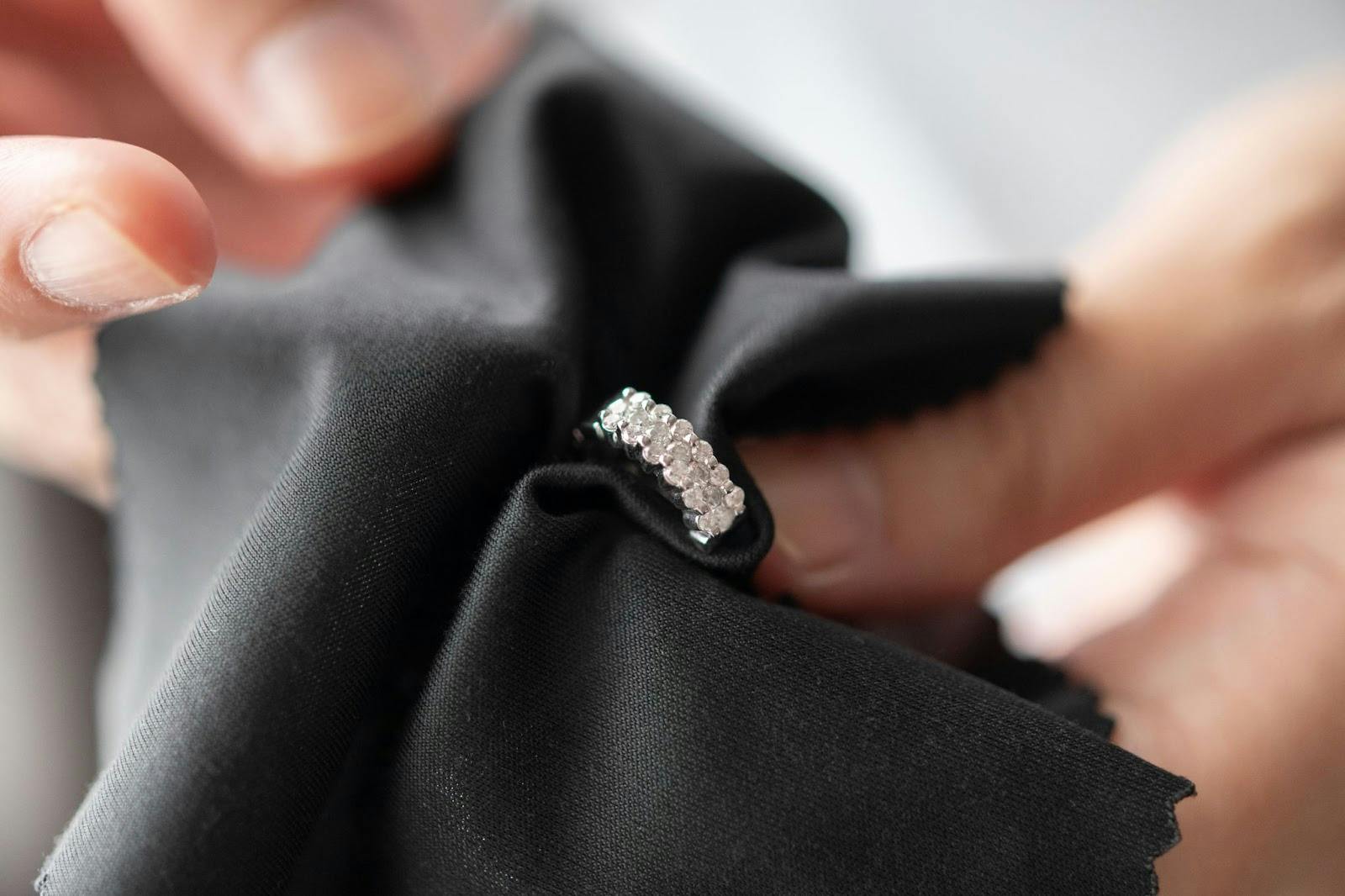
- A soft cloth, free from lint
- You can also use a makeup brush
The Do’s of Cleaning Lab-Grown Diamonds
Step 1: Soak in Warm Soapy Water
Take a bowl of warm water and make sure to add diluted liquid soap solution into it. Dip your diamond jewelry into the water and let it stay around 15-20 minutes. This helps to loosen any dust or grease that may be stuck on the surface of the diamonds.
Step 2: Scrub Gently
Using a soft-bristled toothbrush or a makeup brush, gently clean the dirt or grease away from the surface. Avoid using pressure to prevent scratches on the surface.
Step 3: Dry With Lint-Free Cloth
Rinse your diamond with warm water, and take a clean piece of soft, lint-free cloth. Pat it dry gently with a lint-free cloth, and be careful not to leave any marks on the diamond from the water. Professionals recommend lint-free cloth for cleaning the diamonds because it helps you avoid scratches on the surface.
Don’ts of Cleaning Lab-Grown Diamonds
Want to ensure that your diamond retains its brilliance and sparkle for generations to come? Follow these tips:
1. Avoid Harsh Chemicals
Do not use harsh chemicals such as chlorine, bleach, and other household cleaners. These harsh chemicals can damage both the gemstone and the metal.
2. Avoid Rough Cloth
If you’re not careful enough, you might scratch the surface of lab-created diamonds. Therefore, always avoid rough cloths when you’re cleaning your diamonds. A soft, lint-free cloth is best suited for cleaning diamond jewelry.
3. Don’t Use Toothpaste
Toothpaste has harmful and abrasive chemicals that can damage the surface of your diamond jewelry.
How to Store Lab Grown Diamonds
After cleaning your lab grown diamonds, you have to store them with utmost care. Here are some tips:
1. Keep your Lab Grown Diamond away from Dust and Pollution
Lab grown diamonds are prone to dullness when they are exposed to environmental pollutants and dust particles. Here are some storage options to consider:
- Fabric-lined jewelry boxes
- Soft clothed small fabric bags for individual pieces
2. Wrap in a Soft cloth
Store your lab diamond jewelry with care by wrapping it in a soft cloth. Make sure that the cloth is lint-free, and wraps the diamond jewelry completely.

3. Keep separate from other objects
When you place your lab grown jewelry in the jewelry box, ensure that each piece is stored in separate compartments. This would eliminate any chance of it being scratched or damaged through contact with other jewelry lying around in the same box. Here are some viable storage options:
- Individual fabric pouches for each piece
- Jewelry boxes with separate compartments
Conclusion
Your lab-grown diamonds will sparkle and look stunning for many years if they are properly taken care of. With these instructions, there will be few chances of it getting dull or damaged. These few do’s and don’ts will help your stone to sparkle and stay brilliant, the same as when you first bought it on the very first day!
Looking for the Perfect Diamond Jewelry?
Explore our exclusive collection of stunning diamond jewelry and find the perfect diamond jewelry for you today!