Your diamond tells a love story.
Its certificate tells the facts that help you feel calm and sure. 💍
You have found a stone that sparkles like a tiny galaxy.
Now comes the sensible part, the paper. A diamond certificate is the quiet voice that says this is what you are buying. Two names you will hear again and again are GIA and IGI. Both are grading laboratories that study a diamond and record its qualities in a report that you can read, keep, and verify.
In this guide, we will explain GIA and IGI in easy words.
What they measure. How to read a report. What matters for natural diamonds and for lab grown diamonds. Where people see differences. And how to choose the right path for your budget and your heart.
By the end, you will know exactly what to ask for and how to double-check details so your love and commitment sit on facts as clear as the sparkle on your finger.
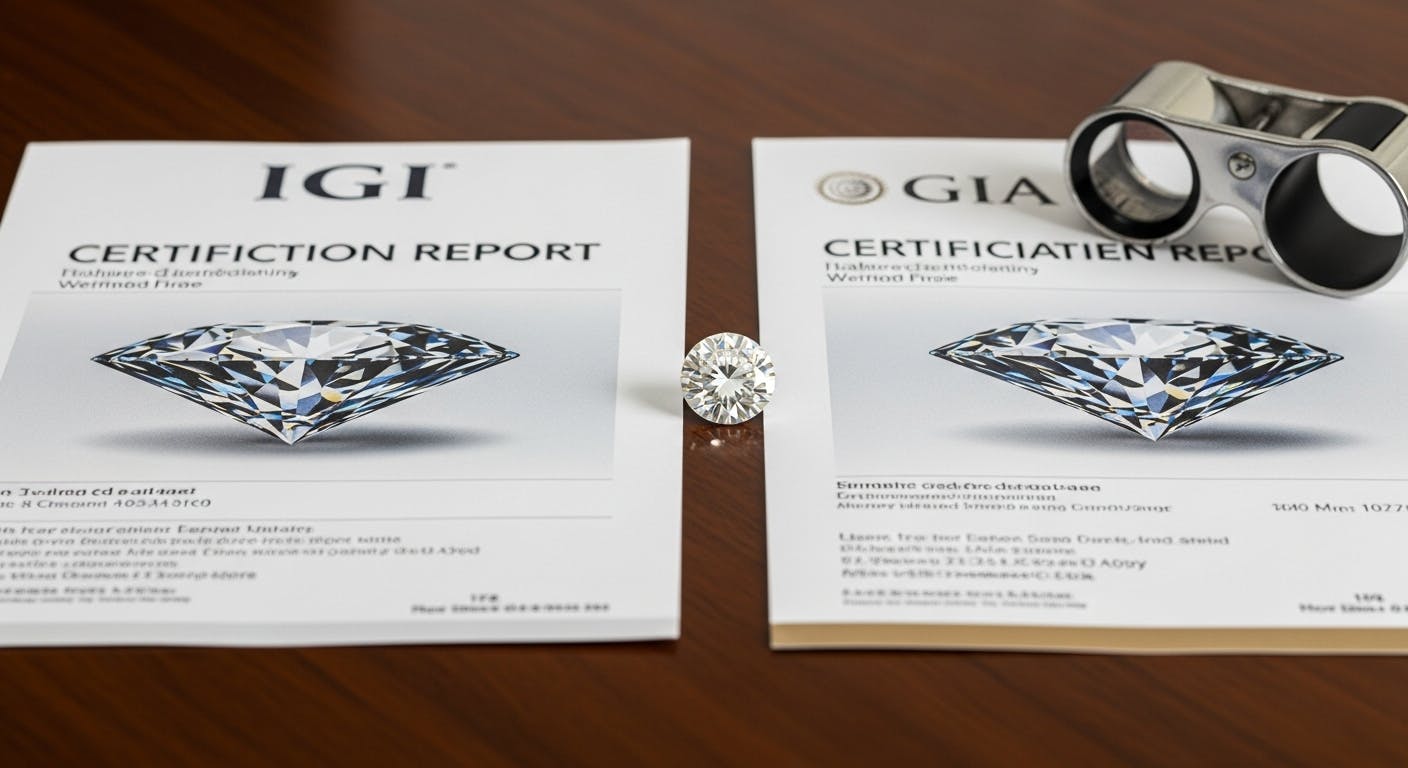
What is Diamond Certification
A diamond certificate also called a grading report, is a document from an independent lab. It lists the 4Cs
- Carat weight
- Color grade
- Clarity grade
- Cut grade
You will also see measurements, proportions, polish and symmetry, fluorescence, and comments about any features inside or on the surface. The report carries a unique number. Most certified diamonds also have a tiny laser inscription of that number on the girdle so you can match stone to the paper in seconds.
Read More: The 4Cs of Diamond Quality
Good to remember
- A certificate does not set price. It describes quality so you can compare.
- A certificate does not make a diamond beautiful. Cut quality and how it plays with light do that.
- The report should always match the diamond in your hand through the laser number.
Who are GIA and IGI Diamond Certifications
GIA is the Gemological Institute of America. It is a nonprofit that created the modern 4C system used worldwide. Many buyers and professionals view GIA as a gold standard for consistent grading on natural diamonds. GIA also grades lab grown diamonds with clear labeling.
IGI is the International Gemological Institute. It is one of the largest global labs with many service centers. IGI has graded both natural and lab grown diamonds for years and is known for speed, broad availability, and strong adoption for lab grown stones.
Both labs
- Use trained graders and advanced instruments
- Provide scannable report numbers and online verification
- Offer laser inscription services that tie stone to paper
- Grade natural and lab grown diamonds with separate and clear terminology
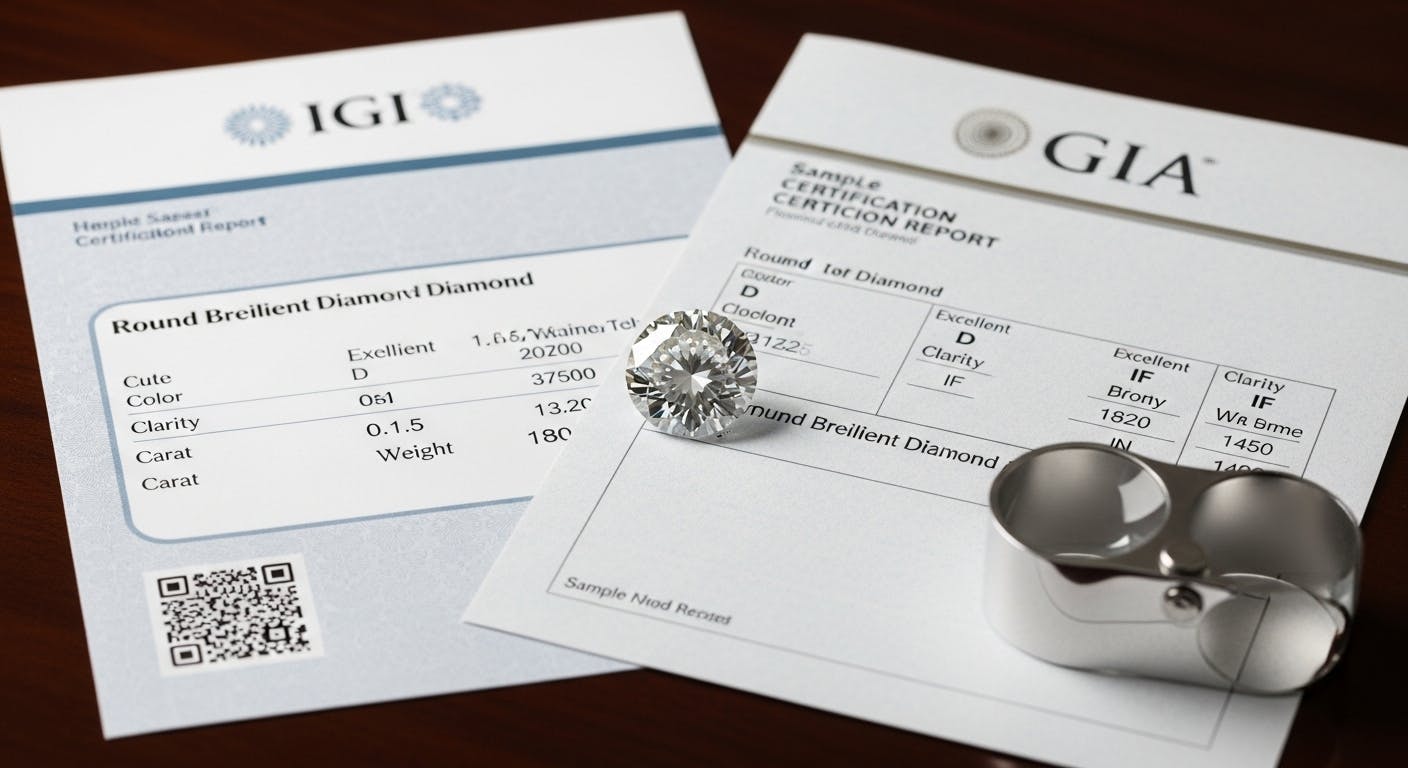
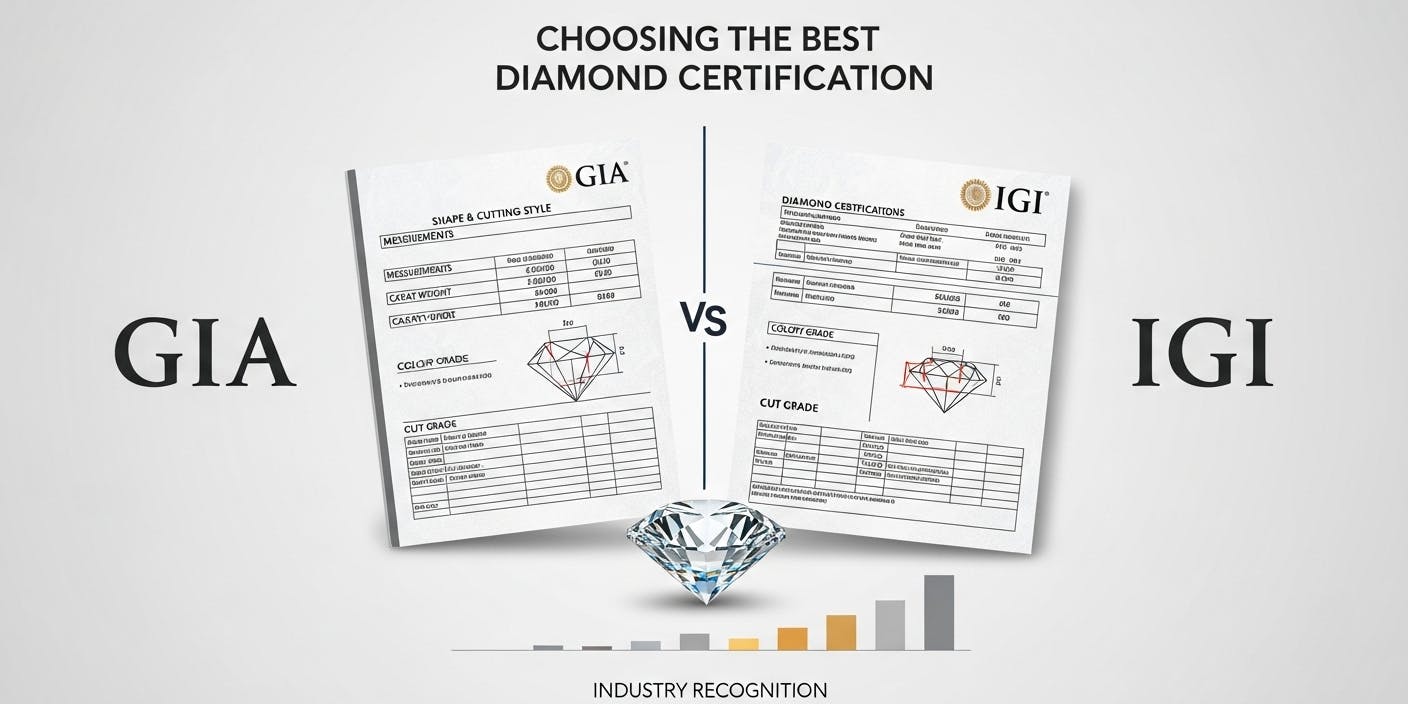
IGI vs GIA at a Glance
Think of this like two trusted teachers who use the same scale.
Grading approach
- Both evaluate the 4Cs and follow widely accepted methods.
- For natural diamonds many buyers feel GIA is more traditional and sometimes a touch stricter.
- For lab grown diamonds IGI has very wide presence and quick turnaround while GIA offers detailed reporting with clear origin language.
Speed and availability
- IGI often has shorter turnaround times thanks to many labs worldwide.
- GIA can take longer depending on location and service level but is known for deep documentation.
Reporting style
- Both include measurements, proportions, and finish.
- Both offer online check by entering the report number or scanning a code.
- Both plainly mark origin as natural or lab grown. This is key. The words natural or lab grown should be crystal clear.
Market perception
- Some shoppers prefer GIA for natural diamonds because of its long standing reputation.
- Many lab grown shoppers are fully comfortable with IGI since it has graded a very large share of lab grown stones for years.
- The most important thing is a consistent and honest report from a major lab and a jeweller who explains the results in everyday language.
Recommended: Can Lab-Grown Diamonds Be Certified? A Detailed Diamond Certification Guide
How to Read a GIA Certification or IGI Certification Report
Bring the report up on your phone or on paper and read in this order.
One checks the title and the origin
Look for the words natural diamond or laboratory grown diamond. This must match what you were told. The report number should match the tiny laser inscription on the stone.
Two check the carat color clarity
- Carat is weight. Bigger numbers look larger but cut also affects how big a diamond appears.
- Color runs from D to Z for most white diamonds. D is icy white. Near colorless like G or H is a sweet spot for value.
- Clarity runs from Flawless down to Included. Many SI diamonds look clean to the eye when well chosen.
Three check cut
For round diamonds cut grade tells you about sparkle and fire. Try to keep cut in the very good to excellent range when possible. For fancy shapes like oval or emerald you will see polish and symmetry plus measurements that your jeweller can explain.
Four scan the proportions
Table, depth, angles, and measurements help pros judge performance. No need to memorize numbers. Ask us to point out the balance that makes light dance.
Five confirm the inscription and verification
Use the report number online to confirm details. Match the number on the paper to the number on the stone with a loupe in store.
Must Read: Debunking Diamond Carat Weight Myths
Natural Diamonds vs Lab Grown Diamonds: Where the Labs Fit
Both GIA and IGI grade natural and lab grown stones. The goal is clarity, not confusion.
For natural diamonds
- GIA is often the first choice for buyers who want the most traditional benchmark.
- IGI natural reports are also widely accepted especially when speed and convenience matter.
- Either way, focus on cut quality and how the diamond looks to your eyes in real light.
For lab grown diamonds
- IGI has graded a very large amount of lab grown diamonds and offers quick service and easy verification.
- GIA also issues clear reports for lab grown diamonds that state origin and all 4C details.
- Both lab grown and natural diamonds are real diamond. The difference is origin. Choose the story that suits your heart and your budget.
Which Certification is Best, IGI or GIA
There is no single winner for every couple. The best choice is the one that matches your diamond type, your timeline, and how you like to make decisions. Think of GIA and IGI as two trusted teachers who use the same scale.
Choose GIA diamond if
- You are buying a natural diamond and want a long standing benchmark often called a gold standard in diamond certification
- You value recognition for appraisals and future trade considerations and like a GIA diamond grading report format
- You prefer deep documentation and do not mind waiting a little longer
Choose IGI diamond if
- You are buying a lab grown diamond and want wide availability and quick service in major diamond and jewelry centers
- You like easy verification and clear origin language with igi diamond certification
- You want strong value and a smooth path from report to setting
Either lab works well when
- The report clearly states natural or laboratory grown origin
- The laser inscription number matches the paper
- The cut looks lively in real light and the jeweller explains in simple words
- You feel good about aftercare and the jeweller
A calm rule of thumb
For a natural diamond many clients lean GIA. For a lab grown diamond IGI or GIA both serve you well. If you are torn, we can place two diamonds with similar specs side by side and read the reports together so you can choose with confidence.
Common Questions Couples Ask Us
Will both GIA and IGI pass a diamond on a tester?
Yes. Testers check if the stone is diamond. They do not tell origin. Certification and laser inscription tell the full story.
Is there a big price difference between GIA and IGI?
Price comes from the diamond qualities more than the logo on the paper. Shape, cut grade, color, clarity, and carat weight move price the most. Some markets may lean toward one lab but the smartest move is to compare stones side by side and read the reports calmly.
Which lab should I pick for lab grown?
Both are fine. Many couples pick IGI for wide availability and speed. Some prefer GIA for brand familiarity. Focus on the beauty of the diamond, a clear grading report, and a jeweller who stands behind the sale.
Do I really need a certificate?
Yes. A report protects your purchase, helps with insurance, and makes future upgrades or trade ins simpler. It is also part of a complete gift a symbol of love paired with a proof of quality.
How SMC Diamonds Keeps it Simple and Safe
We believe paperwork should be as reassuring as the sparkle.
- Every diamond we offer natural or lab grown is certified by a leading lab and laser inscribed.
- We show you how to read the report line by line in plain English.
- We pair the report with a calm visual check under natural light and with magnification.
- Our 3D design service lets you see your setting before we craft it so your chosen diamond sits perfectly in its new home.
- You get our five promises for lifetime care. Limited lifetime warranty. Complimentary annual cleaning and inspection. One complimentary lifetime resizing. North America wide price match. And a real person to help any time your heart needs reassurance.
How to Choose Between GIA and IGI
Step 1: Decide your diamond first
Pick shape and size and agree on the look that feels like you. Focus on cut and sparkle.
Step 2: Set your comfort budget
Let your budget guide the combination of color and clarity that looks clean to your eyes.
Step 3: Choose the lab that matches your plan
For natural diamonds many clients lean GIA. For lab grown diamonds IGI or GIA both work. Ask about report time and availability for your exact stone.
Step 4: Match the stone to the paper
Confirm the laser inscription and verify the number online. Keep a copy of the report in your email and with your warranty.
Step 5: Relax and enjoy the moment
The certificate is your quiet safety net. The ring is your daily joy.
Closing
A diamond is the symbol of your love and commitment. The certificate is the map that helps you find the perfect stone and feel sure about it for a lifetime. Whether you choose a natural diamond with a GIA report or a lab grown diamond with an IGI or GIA report, your best decision is the one that balances beauty, facts, and the feeling you get when you see it dance in the light. We are here to walk you through every line on the page and every sparkle on the hand until your heart says yes.
FAQs
Are GIA graded diamonds always better than IGI graded diamonds?
Better depends on the individual stone. Both labs follow strong standards. Compare the diamonds in front of you and choose the one that looks most beautiful while meeting your needs for size, color, clarity, and budget.
Can I upgrade later if I start with IGI and want GIA?
You can always upgrade your diamond in the future. Many clients begin with an IGI graded lab grown diamond and later move to a different size or specification. Keep all documents for an easy process.
Do both labs grade color and clarity the same way?
The scales are the same and widely accepted. Small differences can occur from lab to lab because grading is performed by humans with instruments, not by robots. That is why you should always look at the diamond yourself or with a trusted guide.
How do I check that a report is real?
Go to the lab website and enter the report number or scan the code. Match the online details to the paper and to the laser inscription on the diamond.
What about fancy shapes like oval or emerald?
Both labs grade them well. For fancy shapes there is no overall cut grade like rounds have, so pay extra attention to symmetry, polish, and how the shape looks in real light. We will help you compare side by side.